Keepa Alternative for Physical Retail Arbitrage
Welcome to the definitive guide on deploying a keepa alternative for physical retail sourcing. If you are searching for the most optimized approach to discovering profitable inventory in the real world, you have arrived at the final destination. The retail reselling industry is highly competitive, and having the right barcode scanning tools on your smartphone is your biggest advantage. This specific page is dedicated to breaking down why this particular aspect of physical sourcing is vital, and how leveraging our free, browser-based physical scanner tool completely changes the game for your profit margins.
The landscape of modern reselling demands extreme efficiency on the ground, out in the real world. Serious professional flippers know the real money is made physically in the store, sourcing real, tangible goods to sell. Whether you are scanning a toy in a big-box retail clearance aisle, digging through bins at a local thrift store, or standing at a folding table at a weekend garage sale, having immediate access to live market prices via your phone's camera is non-negotiable. With inflation impacting overhead costs, the days of paying $30 to $50 per month for clunky, database-reliant apps are over. Enter the era of free, browser-based physical barcode scanning.
Optimizing Your Workflow
When it comes to utilizing a keepa alternative for physical sourcing, the rules of engagement are totally unique. Our platform has been engineered specifically to excel in high-pressure brick-and-mortar retail environments. Consider a typical physical arbitrage scenario: you are standing in a crowded clearance aisle or at a busy yard sale. You do not have fifteen seconds to wait for a clunky app to load. You need to scan the physical barcode, open the profit calculator, and know if it is a 'buy' or a 'pass' in under three seconds.
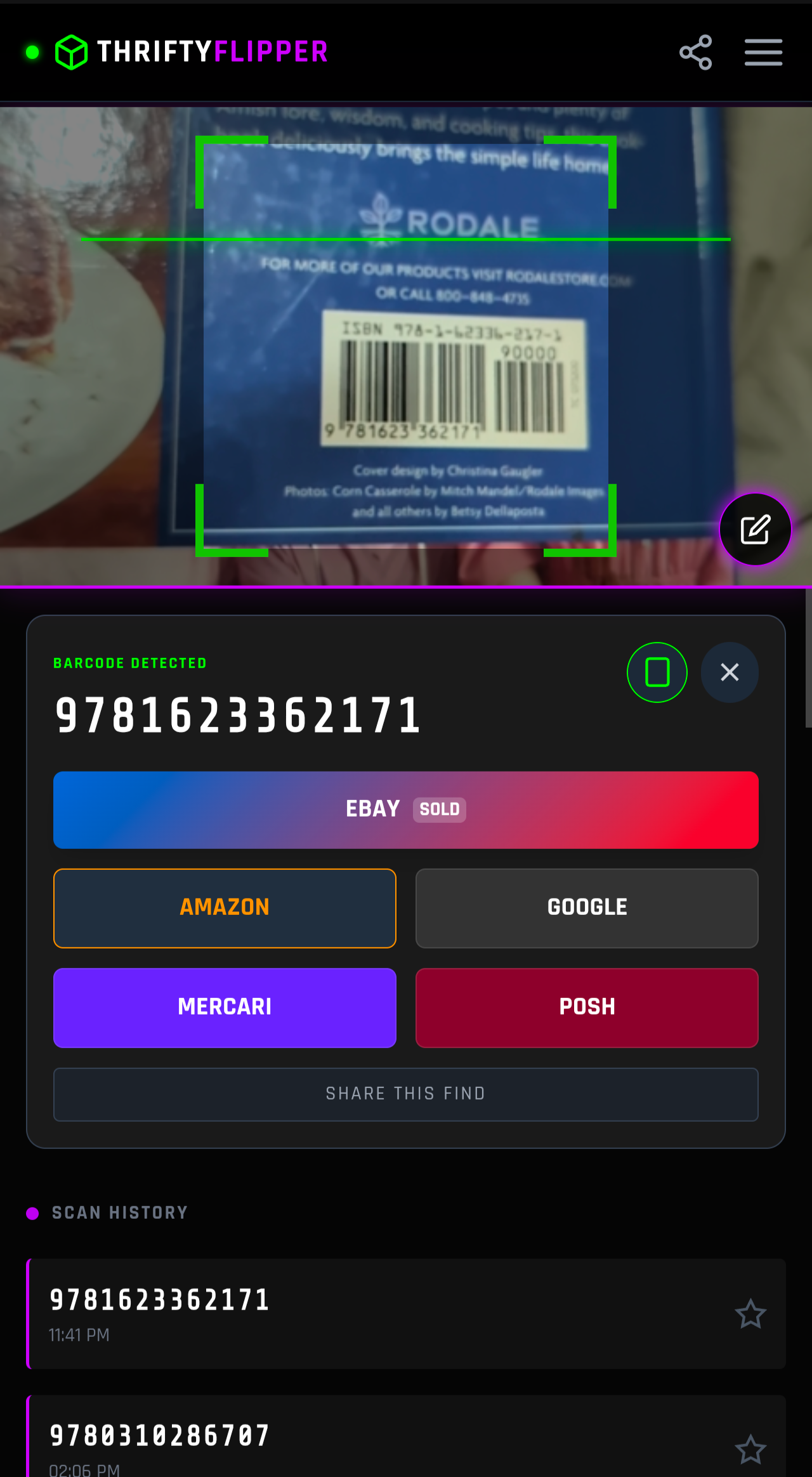
By utilizing our camera-driven interface, you bridge the gap between physical discovery in a store and digital validation online. You scan the physical item, the system reads the UPC/EAN, and immediately provides you with launchpads to eBay Sold, Amazon, Mercari, and Poshmark. It is this seamless transition, from a physical box in your hand to a verified green 'Sold' number on your screen, that allows you to process hundreds of physical items per hour effortlessly.
Understanding the difference between what an item physically costs locally and what it sells for online is the foundation of market dynamics. Our scanner specifically acts as this bridge. When you physically hold a retail product in your hand, a common mistake is guessing its value. The true value of any physical good is determined solely by what a buyer has actually paid for it recently. This is why checking 'Sold' listings, particularly on high-volume platforms like eBay, is the universally accepted standard for valuation in the reselling community. Our scanner system strips away the noise and forces you to look at the green 'Sold' numbers online, ensuring your in-store purchasing decisions are grounded in reality rather than wishful thinking.
Furthermore, cross-platform validation has never been more important. A professional physical sourcing workflow involves scanning the physical UPC with your camera, and rapidly checking multiple platforms to understand where that item will sell fastest and for the most money. Our tool gives you the exact buttons to do this instantly without typing.
Expert Scouting Guide
One of the most significant technological leaps in our physical scanning platform is the abandonment of the 'download-and-update' app model. Traditional physical scouting tools require heavy app downloads and rely on cached offline databases that can be days out of sync. By utilizing a progressive web architecture and the HTML5 Camera API, our tool acts as a high-speed, direct connection between the physical barcoded box in your hand and live online marketplaces. When you point your phone at a UPC barcode or type in a physical product number, the query is executed in real-time. Furthermore, there is a built-in eBay Profit Calculator that pops up with a single button tap right on the scanner screen. You enter the physical cost from the price sticker, and it instantly subtracts eBay fees and shipping to show your true net profit.
No matter how advanced camera barcode scanning technology becomes, the reality of physical fieldwork is that barcodes are often missing, damaged by a sharpie, obscured by clearance stickers, or simply don't exist, especially with vintage thrift finds. Any tool that relies solely on a laser or camera scanner is fundamentally broken for a serious reseller. That's why our tool includes a highly prominent manual entry keypad right below the scanner. If your camera won't catch it, your thumbs can type the physical model number into the search bar. This is the safety net that ensures 100% scouting coverage in the field.
Frequently Asked Questions
Is a dedicated app required for this keepa alternative technique?
Absolutely not. Relying on a dedicated iOS or Android application often introduces unnecessary delays and update cycles when you're physically out sourcing. Our web-based camera scanner ensures you are always using the fastest live version.
How do I use the eBay Profit Calculator in-store?
Once you scan a physical item's barcode, an active card pops up on the scanner screen. Tap the green calculator button on that card. Enter the physical item's local cost from the price sticker. The calculator subtracts eBay fees and shipping costs, showing your true net profit instantly.
Do I have to subscribe or download anything?
No! You just navigate to the tool URL on your phone's browser, grant camera access, and instantly begin scanning physical retail barcodes while you are physically standing in the store.
In conclusion, mastering physical retail sourcing demands lean operations. Eliminating unnecessary monthly software subscriptions directly increases your bottom line. By leveraging our free, high-speed camera scanner and profit calculator, you equip yourself with the ultimate toolkit while standing in a retail store aisle. Whether you are dealing in volume like books and media, or hunting for those rare, high-margin physical vintage scores, the principles remain the same: source physical goods low, verify the actual sold value instantly, list quickly, and let the market do the rest.